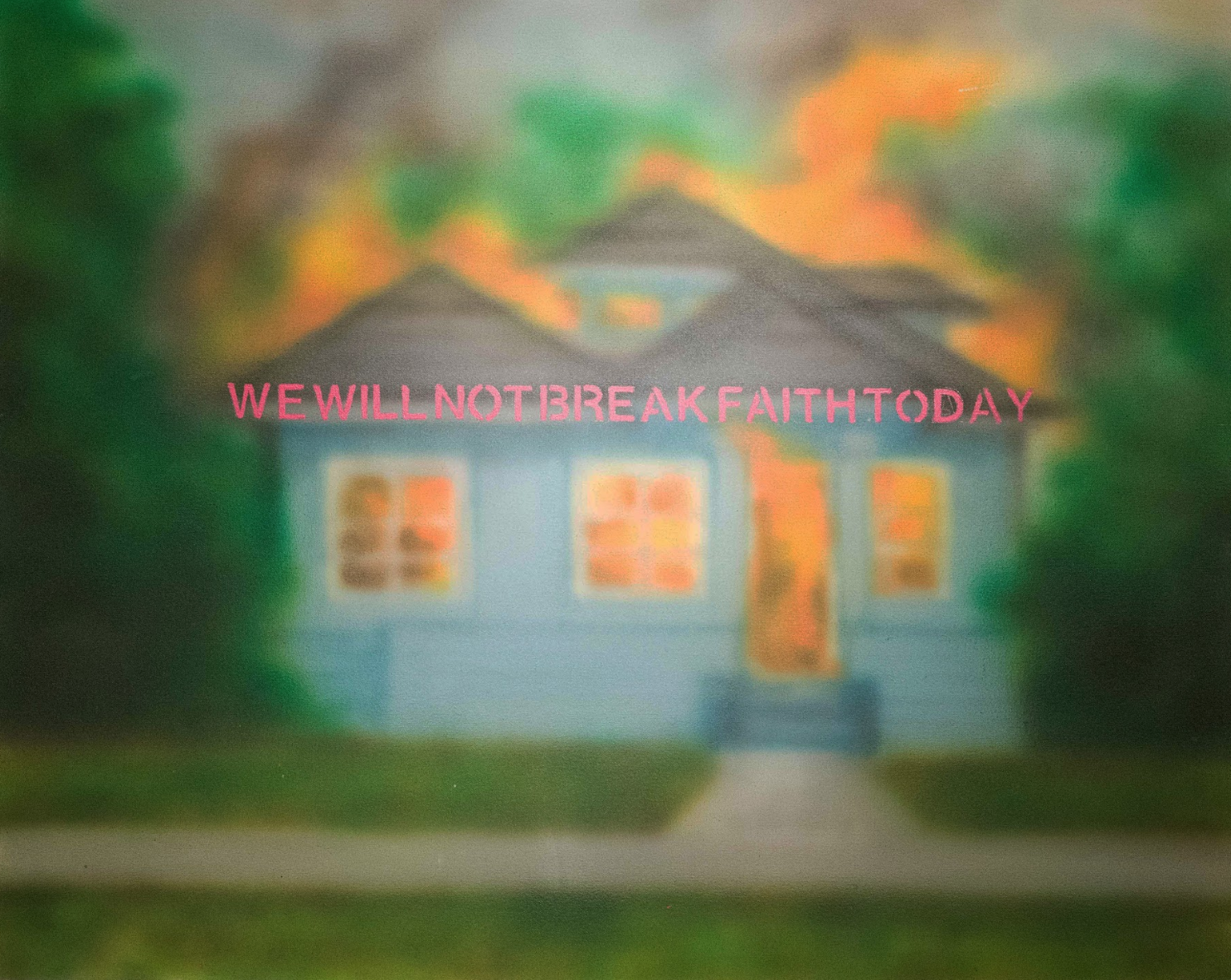
“Horror and fear are not the same,” Chen said. “Fear makes you want to run quickly, but horror makes you stop. You begin to ask a lot of questions within horror. What happened? Why am I feeling this? What is changing?”

Feel free to reach out for commissioned work.
“Horror and fear are not the same,” Chen said. “Fear makes you want to run quickly, but horror makes you stop. You begin to ask a lot of questions within horror. What happened? Why am I feeling this? What is changing?”
The featured artists, trained in Western art academies, wrestle with the dual challenge of honoring their cultural and religious heritage while adapting it for a global audience. As they infuse traditional motifs into their work, I feel there is a risk that the profound depth of these elements may be diluted, often in efforts to engage with pressing contemporary issues such as identity politics and environmental concerns.
As the struggles of decolonization unfold at the level of nation-states, stories about the colonial past are often told from a perspective of a victim. Such flattening narratives deprive individuals the agency to form an autonomous view of their history, leading to a reduced sensibility of geographical, psychological, and cultural complexities, even cultivating a polarising nationalism.
尽管艺术教育作为一个专业发展领域有其必要,但在整个美术馆行业因疫情而面临着财政危机的情况下,艺术教育工作者也应该避免把自我定位成工具箱中某个精准的配件。公共教育作为艺术传播、普及过程中最重要的环节,也最有潜力为美术馆赢得来自更多行业的认可和资助,以帮助美术馆缓解财政危机的窘境。针对社交隔离和艺术行业资金缩紧的现状,如果艺术教育工作者试着参考在社会其他领域已经得到广泛应用的大众传播和社交营销,将自己这一套极具创意、思辨力和感染力的语言能力,应用到艺术话语空间之外的地方,或许可以赋予公共教育以商业价值,进而扩展美术馆的生存空间。